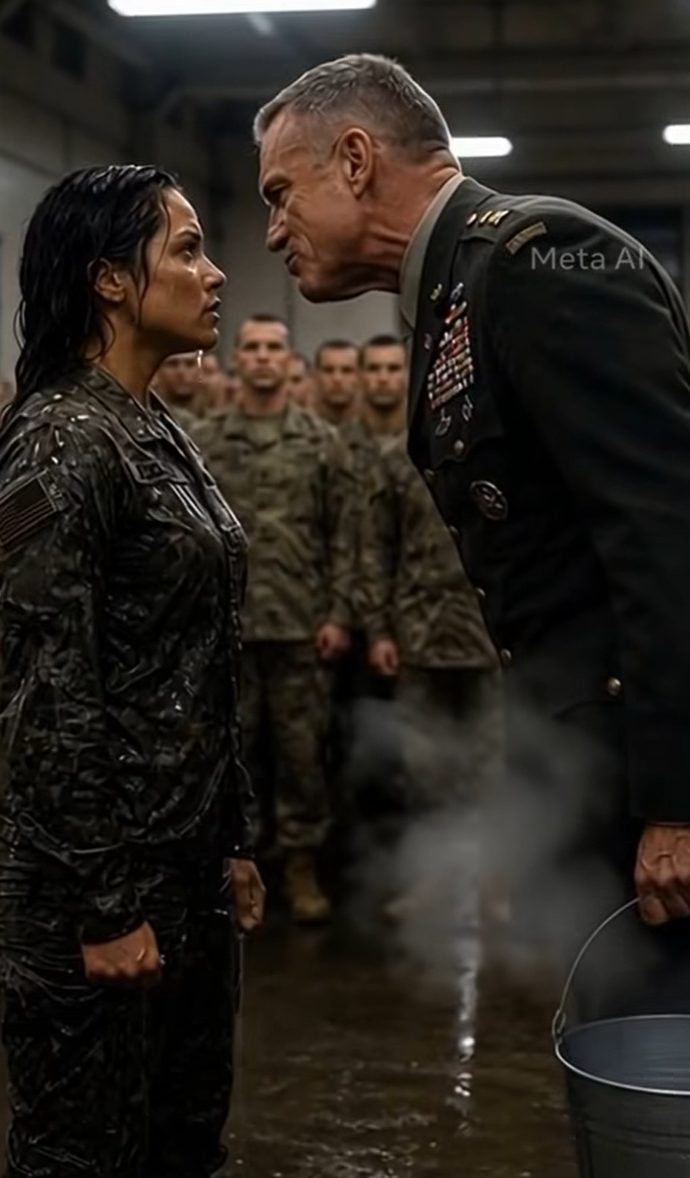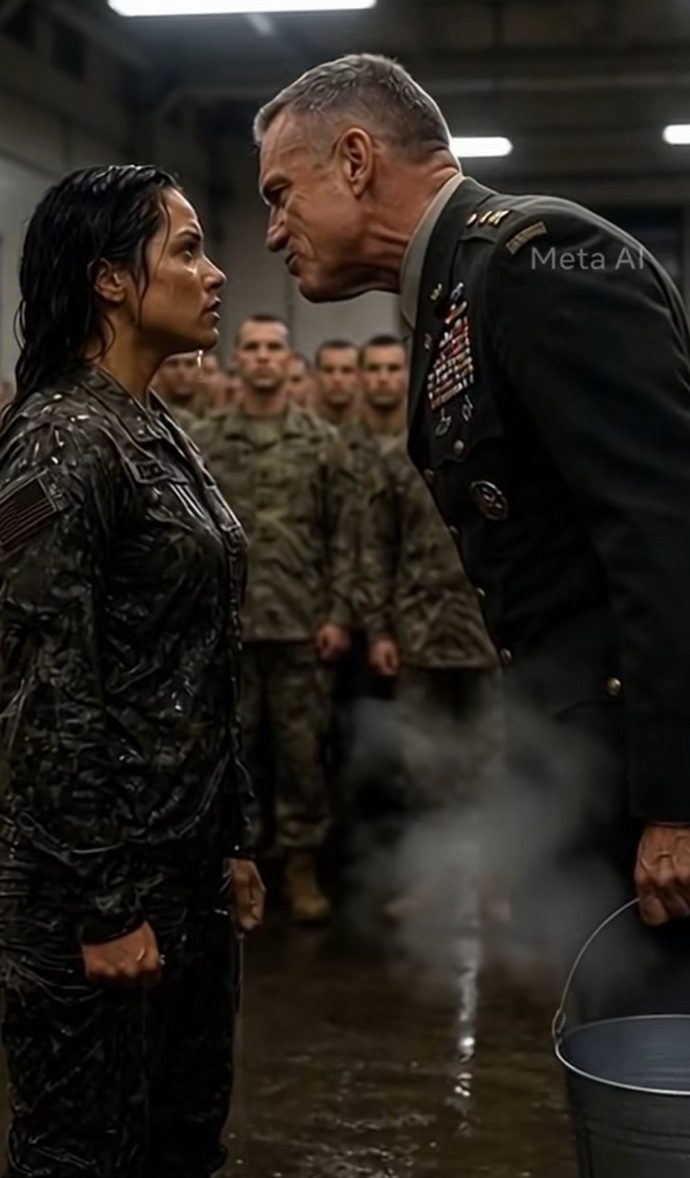

HE DEMANDED I EMPTY MY BAG IN FRONT OF THE ENTIRE MESS HALL. SO I DID.
His hands wouldn’t stop shaking.
I watched him stare at those medals like they were ghosts. Like they might reach up from the velvet and grab him by the throat.
The mess hall was so quiet I could hear the kitchen clock ticking from thirty feet away.
Reed’s mouth opened. Then closed. Then opened again.
“Who…” he started. His voice cracked. He cleared his throat. “Who signed off on the Silver Star?”
I didn’t answer right away.
I reached back into the duffel.
This time I pulled out a folded letter. The paper was yellowed at the creases, soft from being opened and refolded too many times over too many years.
I set it on the table next to the case.
“Read the signature,” I said.
My voice was barely above a whisper.
Reed picked up the letter like it might crumble in his fingers. His eyes scanned the page. I watched the exact moment they reached the bottom.
His entire body went rigid.
The letter slipped from his grip.
A corporal standing two tables away craned his neck, trying to read the name. He caught it. His face went white.
“Holy sh*t,” the corporal breathed.
Reed looked up at me.
For the first time since I’d arrived, his eyes held something other than contempt.
It was fear.
Not fear of me. Fear of what he’d done. Fear of what this meant. Fear of the name on that paper and who it connected me to.
“You’re not just a medic,” he said slowly.
I picked up the letter. Folded it carefully along its familiar creases. Slid it back into the duffel.
“I never said I was just a medic,” I replied.
Behind me, boots scraped. A chair pushed back. Then another.
I didn’t turn around, but I heard it – the sound of soldiers standing.
Not to leave.
To stand at attention.
Reed’s lip trembled. He looked around the room at the men and women now rising from their seats, trays abandoned, faces pale and locked forward.
He turned back to me.
“Sergeant Reed,” I said calmly, zipping the duffel closed. “You wanted to know what kind of game I’m playing.”
I stood up. Lifted the bag onto my shoulder.
Stepped close enough that only he could hear what I said next.
“I’m not playing anything. I’m your new commanding officer. And the reason they transferred me here?”
I glanced toward the door, where two MPs had appeared silently, hands resting at their belts.
“It’s because someone on this base has been selling medical supplies to contractors off-post. Six shipments. Four months. And the investigation traced every single one back to…”
I looked him de*d in the eyes.
Reed stopped breathing.
“…your unit.”
The MPs stepped forward.
The mess hall erupted.
But I was already walking toward the door, my worn duffel pressed against my chest exactly the way I’d carried it off the bus.
Behind me, I heard Reed’s voice break as he shouted after me:
“Wait – I didn’t – you don’t understand, it wasn’t – “
I didn’t turn around.
Because the file in my bag had one more page he hadn’t seen yet. A page with phone records. Timestamps. And a name.
Not his name.
His wife’s….
Before Any of That
I got to Fort Cavazos on a Tuesday in late October, just after 0630, on a bus that smelled like diesel and someone’s leftover fast food.
No escort. No welcome packet. I’d asked them not to bother.
I had a duffel bag, a set of orders sealed in a manila envelope, and eleven years of service that, from the outside, looked like nothing remarkable. Combat medic. Three deployments. Quiet record. The kind of file a bored clerk skims in forty seconds.
That was the point.
My name is Carver. Diane Carver. And the only people who knew exactly why I was there were two officers at the Pentagon and one very tired colonel at JAG who’d been working the supply theft case since June.
I didn’t go to the command building first. I went to the mess hall, because I’d been on a bus for four hours and I wanted coffee and eggs and I wanted to see the unit before they knew who I was.
That’s always when you learn the most. Before anyone’s performing for you.
What I Saw Before Reed Opened His Mouth
The mess hall at 0700 on a Tuesday is a good read of a unit’s health.
Healthy units are loud. People rag on each other across tables. Someone’s always got a bad joke. The noise is a kind of friction, the social kind, the kind that means people actually know each other.
This unit was quiet.
Not disciplined quiet. Careful quiet. The kind where people eat with their eyes slightly down and conversations stop when someone new walks in. I’d seen it before. In units where leadership had gone wrong. Where trust had curdpled into something else.
I got my tray. Found a seat near the back wall, facing the room. Old habit.
I was on my second cup of coffee when Reed walked in.
I knew him from his photo in the file. Sergeant First Class Dale Reed, thirty-eight, twelve years in, unit supply NCO. Big guy. Not tall, just wide across the shoulders, the kind of build that makes people step back when he moves through a room. He had a walk that said he knew it.
He clocked me in about six seconds.
New face. Civilian clothes. No rank visible. Sitting alone at the back table with a duffel bag that looked like it’d been dragged through a war, which it had, twice.
He came over.
I didn’t look up from my coffee.
“You lost?” he said.
“Nope.”
“Visitors check in at the front gate. They don’t just wander into the mess.”
I took a sip. “I checked in at the front gate.”
He pulled out the chair across from me and sat down without being invited. Leaned forward with his forearms on the table like he was doing me a favor by giving me his attention.
“Who are you here to see?”
I looked at him then. Just looked. Didn’t answer.
He didn’t like that.
“I asked you a question.”
“I heard you.”
That was when it shifted. His jaw tightened. He looked around the room, making sure people were watching, and some of them were, the ones who’d learned to track Reed’s moods the way you track weather.
“Empty the bag,” he said.
The Moment He Made It a Show
He said it loud enough for the tables nearby to hear.
“Empty the bag. On the table. Now.”
A few soldiers looked over. A few looked away. One specialist, young, maybe twenty, stared at her tray like she was studying it.
I’ve been in a lot of rooms where someone tried to use volume as authority. Reed was good at it. The kind of good that comes from years of practice. He’d done this before, made someone feel small in front of an audience, and he knew the audience was the point.
I set my coffee down.
Unzipped the duffel.
And I started taking things out.
A change of clothes. A toiletry bag. A paperback I’d been meaning to finish since August. A water bottle. A phone charger.
Reed’s expression said: see, nothing, just some civilian who wandered in, probably a dependent, probably somebody’s wife.
Then I reached back in and my hand found the case.
Dark blue velvet. Hinged. About the size of a shoebox.
I set it on the table and opened it.
The mess hall got quiet the way rooms get quiet when something shifts and nobody’s sure yet which way it’s going to go.
Reed looked at what was in the case.
His face changed.
What Was in the Case
Three decorations, mounted and framed the way they do it for official display.
A Purple Heart. An Army Commendation Medal with a valor device. And a Silver Star.
Reed knew what a Silver Star meant. Everyone in that room knew. You don’t get one for paperwork.
His eyes came up to mine and for the first time there was a question in them instead of a statement.
That’s when I pulled out the letter.
The paper was yellowed at the creases, soft from being opened and refolded too many times over too many years. I set it on the table next to the case.
“Read the signature,” I said.
After the MPs
The name on that letter was one most people in that room recognized. A general who’d retired four years ago after thirty-one years of service, whose picture was in the hallway of every Army installation I’d ever been posted to. A man who did not write personal commendation letters for people who didn’t earn them in ways that kept other people alive.
That’s what the letter said. What I’d done. Where. When.
Reed read it and turned to stone.
The corporal two tables over caught the name and said what he said.
And then I told Reed what I told him, quietly, close, so only he heard the last part.
His wife’s name was Sandra. She’d been coordinating the pickups through a phone registered to her mother. The contractors paid in cash, routed through three different accounts. Neat work, honestly. The kind of thing that takes planning.
Reed didn’t know. Or he knew some of it and not all of it. Or he knew all of it and had told himself a story about it being temporary, about paying it back, about it not really being what it was.
I’d seen all three versions before. This looked like the second one.
The MPs were Gaines and Pollard, both out of CID, both briefed two days prior. They were good. They came in quiet and they moved to Reed without any drama, one on each side, and Reed’s hands came up in that reflex way, not aggressive, just startled, the hands of a man who still couldn’t believe the room had rearranged itself so completely in the space of four minutes.
He was still talking when I reached the door.
I heard “you don’t understand” and I heard “it wasn’t supposed to” and I heard his voice break on something I didn’t catch because by then the door was swinging shut behind me.
The Part Nobody Asks About
People hear a story like this and they want to know about the confrontation. The reveal. The look on his face.
What they don’t ask about is the drive over from the bus depot that morning, when I sat in the back of a cab and watched Fort Cavazos come into view and thought about the specialist in the supply room who’d filed an anonymous report in July because she couldn’t sleep anymore. Twenty-two years old. Name was Darby. She’d flagged six discrepancies in the inventory logs and submitted the report through a channel most people don’t even know exists, and then she’d gone back to work and kept her mouth shut and waited.
She didn’t know I was coming. She didn’t know anyone had listened.
Part of my job, after the Reed situation was processed, was to find Specialist Darby and tell her directly: someone heard you.
I did that the next morning. Knocked on the door of her barracks room at 0800.
She opened the door and looked at me in my uniform now, rank visible, and her face did something complicated.
“You’re the one from the mess hall,” she said.
“Yeah.”
She was quiet for a second. “Is it over?”
“That part is.”
She nodded. Looked at the floor. Then back up.
“I didn’t think anyone was going to do anything,” she said. “I almost didn’t send it.”
I didn’t tell her she was brave. She didn’t need me to narrate it back to her.
“You did send it,” I said.
That was enough.
What the Duffel Actually Is
I’ve carried that bag for eleven years. It’s not a prop. It’s not a statement.
It’s just a bag.
The medals are real. The letter is real. I don’t take them out to impress people. I take them out when someone decides that what I look like is a complete inventory of what I am.
Reed made a choice when he told me to empty it. He wanted the room to see me reduced to the contents of a bag, sorted and judged and found ordinary.
He got the contents of the bag.
That part he asked for.
The rest of it he’d been building toward for four months, one missing shipment at a time, and all I did was walk through the door at the end of it.
The last page of the file, the one with Sandra Reed’s phone records, went to the JAG office that afternoon. Her attorney contacted the investigator by end of week.
Dale Reed was processed out eight months later.
I’m still here.
Same duffel. Same coffee.
Different mess hall.
—
If this one got you, pass it to someone who’d appreciate it.